Conservative justices actually consider race – except in correcting inequality
In Louisiana v Callais, the supreme court has openly considered white Republicans in partisan redistricting
TL;DR
- The Supreme Court's 6-3 decision in City of Richmond v JA Croson Co in 1989 questioned how courts discern race-consciousness in cases involving affirmative action.
- Justice Sandra Day O'Connor ruled against Richmond's minority contractor set-asides, deeming them too strict and not directly tied to proof of past discrimination.
- Justice Antonin Scalia advocated for a "colorblind" interpretation of the Equal Protection Clause, arguing the government should not consider race even to remedy past discrimination.
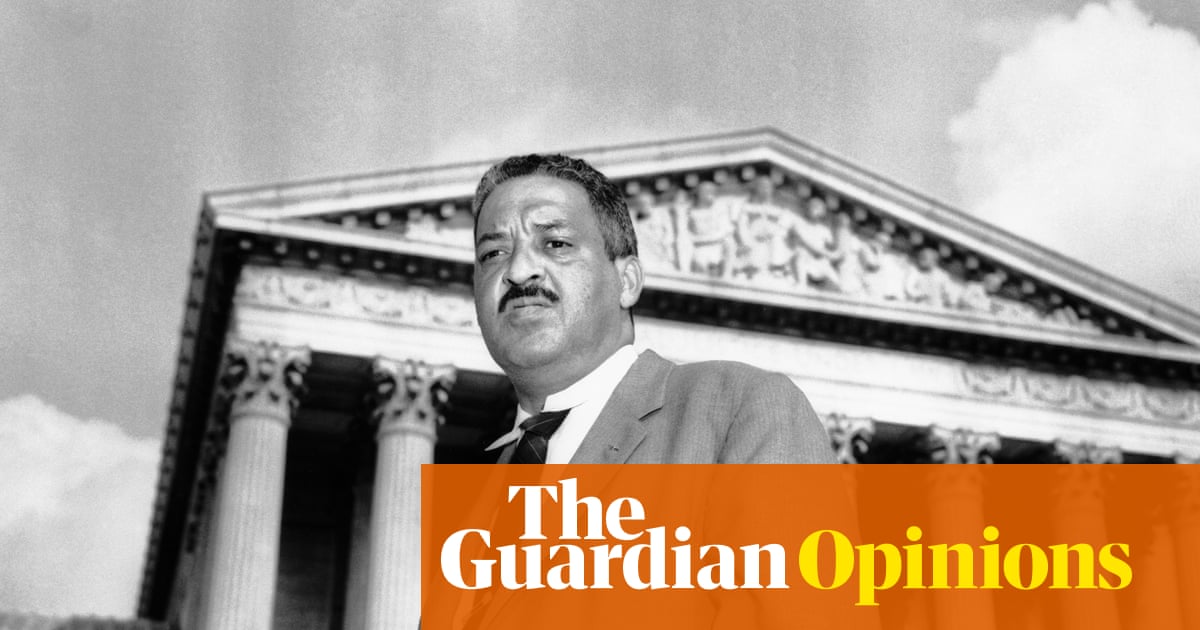
- Thurgood Marshall, in his dissent to JA Croson, warned that a "racial neutrality" approach could undo civil rights gains and differentiate between racist actions and those remedying past racism.
- The Supreme Court's recent 6-3 decision in Louisiana v Callais has been criticized for weakening the Voting Rights Act (VRA), particularly Section 2 protections for drawing majority-Black districts.
- The Callais decision ruled Louisiana's redistricting map unconstitutional because it diluted the power of white Republican voters, despite the state's significant Black population.
- Critics argue the court's decision in Callais actively considers race to protect white voters while dismissing race as a basis for examining discrimination against Black Louisianans.
- Justice Elena Kagan, in her dissent, stated that the Callais decision renders Section 2 of the VRA a "dead letter" and sets back racial equality in electoral opportunity.
- The court's actions are seen as a continuation of a strategy to dismantle multiracial democratic power and roll back protections for Black voters, reflecting a selective race consciousness that benefits white interests.
- Marshall's foresight predicted the court's selective race consciousness and warned that the nation was far from eradicating racial discrimination.