Photos: Releasing Animals Back Into Their Habitats
Recent images of the moment of release—when many different kinds of animals were reintroduced to their natural habitats after rehabilitation, or as part of repopulation efforts, or simply to help grow an ecosystem.
TL;DR
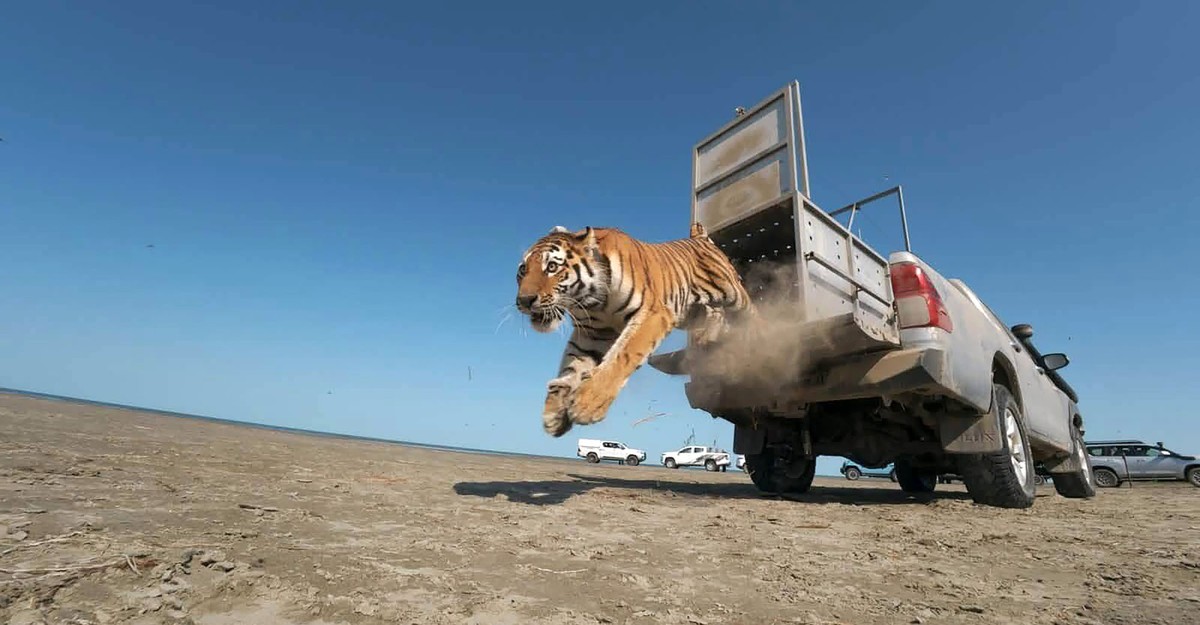
- Amur tigers were released into Kazakhstan's Ile-Balkhash Nature Reserve as part of a repopulation effort.
- Seals were released into the wild on the German island of Juist after being raised at a sanctuary.
- Bats in Ukraine, classified as vulnerable or rare, are cared for in winter and released in spring.
- Wild horses were released onto the Sophienhöhe in Germany as part of a land recultivation project.
- Field hamsters were reintroduced into the wild in Germany as part of a release program.
- Baltic sturgeons were released into the Oder River in Germany to aid in repopulation efforts.
- Sea turtles were released back into the Mediterranean Sea from Israel after rehabilitation.
- A Cooper's hawk, rehabilitated from head trauma, was released in Mission Viejo, California.
- Sea-lion pups were released into the ocean near Hermosa Beach, California, after medical treatment.
- Hundreds of rescued birds, including songbirds, pheasants, and owls, were released in Ukraine's Kharkiv region after rehabilitation from injuries.
- Lesser-spotted catsharks were released into the North Sea near Borkum, Germany.
- Juvenile giant tortoises were released on Floreana Island, Galapagos, to reintroduce the species.
- Swiss ibex were released in Bad Tölz, Germany.
- California brown pelicans, treated for starvation and injuries, were released in San Pedro, California.
- Endangered crayfish were released into a gravel pond in Germany to ensure their long-term survival.
- Iberian lynx were released in Spain as part of a project to repopulate the native species.
- An injured griffon vulture was released into its natural habitat in Turkey after care and rehabilitation.