A Strikingly Complex Portrait of a Founding Father
A new exhibition makes George Washington seem like anything but a saint. That’s a good thing.
TL;DR
- The Trump administration's observances for the nation's 250th anniversary present a limited view of American history, focusing on current leadership.
- Patriotism can involve complex and difficult contemplation, as exemplified by writer Philip Roth's deep study of slavery.
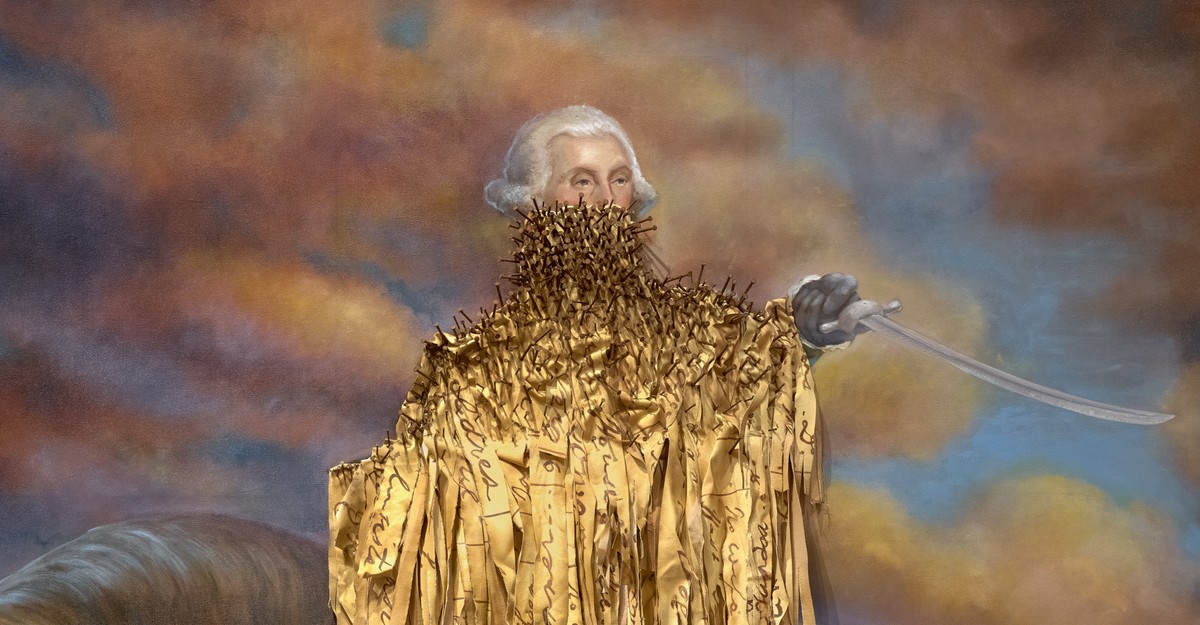
- The VMFA exhibition 'Titus Kaphar and Junius Brutus Stearns: Pictures More Famous Than the Truth' examines Washington's role as a slaveholder.
- Titus Kaphar's contemporary works contrast with Junius Brutus Stearns's 19th-century imagined scenes of Washington's life.
- Kaphar integrates fragmented narratives of Washington, presenting him as both a hero and a flawed individual who enslaved others.
- Kaphar's art, using varied media and luminous techniques, is considered to surpass Stearns's work in visual impact and meaning.
- The exhibition provides a model for honoring the 250th anniversary by celebrating contemporary art that engages with historical complexity.
- The article contrasts the Confederate monuments once on Monument Avenue with Kehinde Wiley's 'Rumors of War' sculpture.
- Stearns's paintings contributed to the myth of slavery as a benevolent institution by depicting enslaved people as content.
- Kaphar also portrays enslaved individuals like Hercules Posey and Christopher Sheels, bringing them from obscurity into focus.