‘Self-imposed irrelevance’: why the EU is failing to act on growing public criticism of Israel
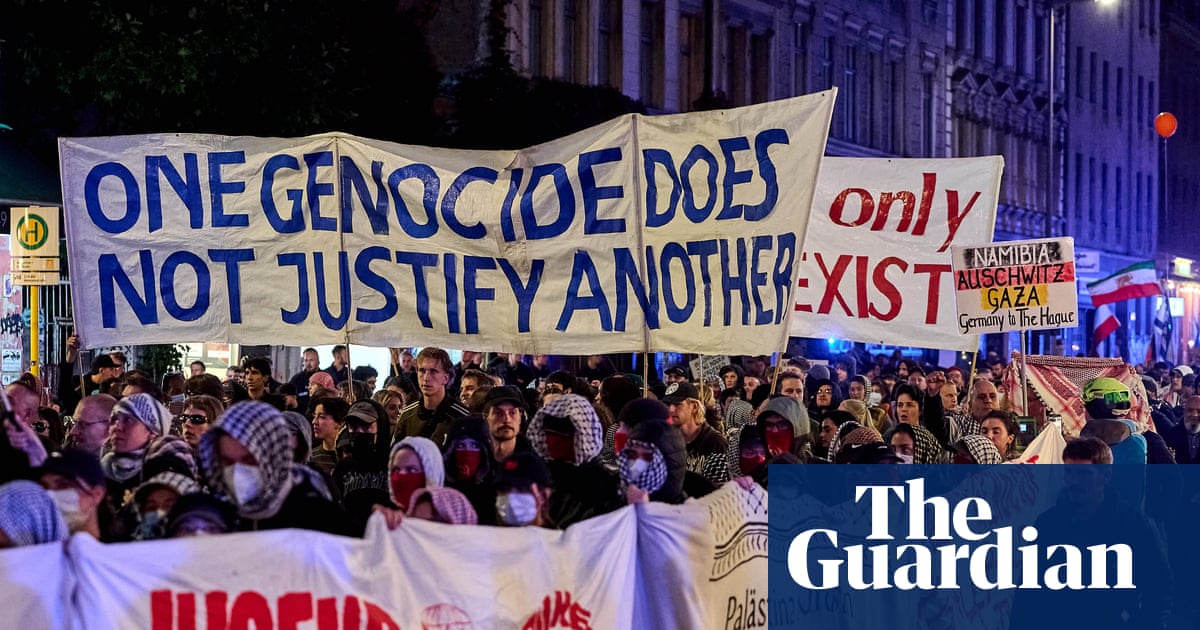
While Israel’s actions against Palestinians intensify public anger, the bloc remains paralysed along familiar fault lines
TL;DR
- Public opinion in several European countries shows a significant negative view of Israel, with views becoming more negative after the US-Israeli war on Iran.
- The EU faces internal divisions, with a group supporting Palestine, a group opposing targeting Israel's government, and a larger middle group with mixed criticisms.
- Germany and Italy are identified as key countries blocking EU measures against Israel, such as trade sanctions on illegal settlements.
- Former EU officials and diplomats have issued a statement condemning the bloc's failure to act and accusing Germany and Italy of complicity.
- The European Commission has not proposed bans on trade with illegal settlements, despite a 2024 international court of justice ruling on their illegality.
- EU Commission President Ursula von der Leyen has stated the EU cannot act when member states disagree, although some argue she could change the dynamic by proposing action.
- Public confidence in Israeli Prime Minister Netanyahu is low in Italy and Germany.
- Recent political debates, such as the Green party's motion equating Zionism with racism in the UK, have also caused controversy and drawn criticism.